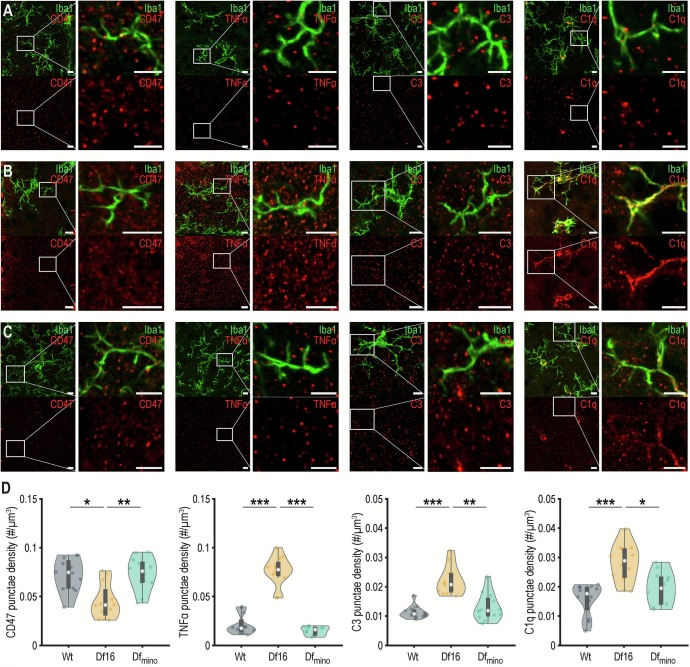
Cognitive deficits in neuropsychiatric disorders arise from disrupted neuronal network activity, and growing evidence implicates neuroinflammation in this process, though the underlying mechanisms remain unclear. Using the Df(16)A mouse model of the human 22q11.2 microdeletion, we found that early postnatal mice display altered inflammatory signaling and increased microglial density in superficial layers of the prefrontal cortex. This was accompanied by reduced dendritic spine density, abnormal prefrontal network activity, and impaired cognitive flexibility in juvenile animals. Early treatment with the anti-inflammatory drug minocycline rescued inflammatory signaling, neural activity, and behavioral performance. These results highlight developmental modulation of neuroinflammation as a potential therapeutic strategy for the 22q11.2 deletion syndrome.
Early rebalancing of neuroinflammatory cascades lastingly rescues prefrontal deficits in a 22q11.2ds model, Günther A, Chini M, Bitzenhofer SH, Marquardt A, Hanganu-Opatz IL. 2026. Brain, Behavior, and Immunity